
Welcome – explore the programme
We have 5 competitive categories and 6 themed strands.
Alanis Obomsawin: a retrospective of the groundbreaking filmmaker on the occasion of her receipt of the RAI Lifetime Achievement Award 2023. Obomsawin, a member of the Abenaki Nation, has worked as a director and producer at the National Film Board of Canada since 1967. In a remarkable career of 54 years, she has over 50 films to her credit with special focus on the lives of First Nation and Métis peoples. With this selection of 10 films we aim to give an overview of her career from her first feature documentary Mother of Many Children (1977) to her most recent Honour to Senator Murray Sinclair (2021).
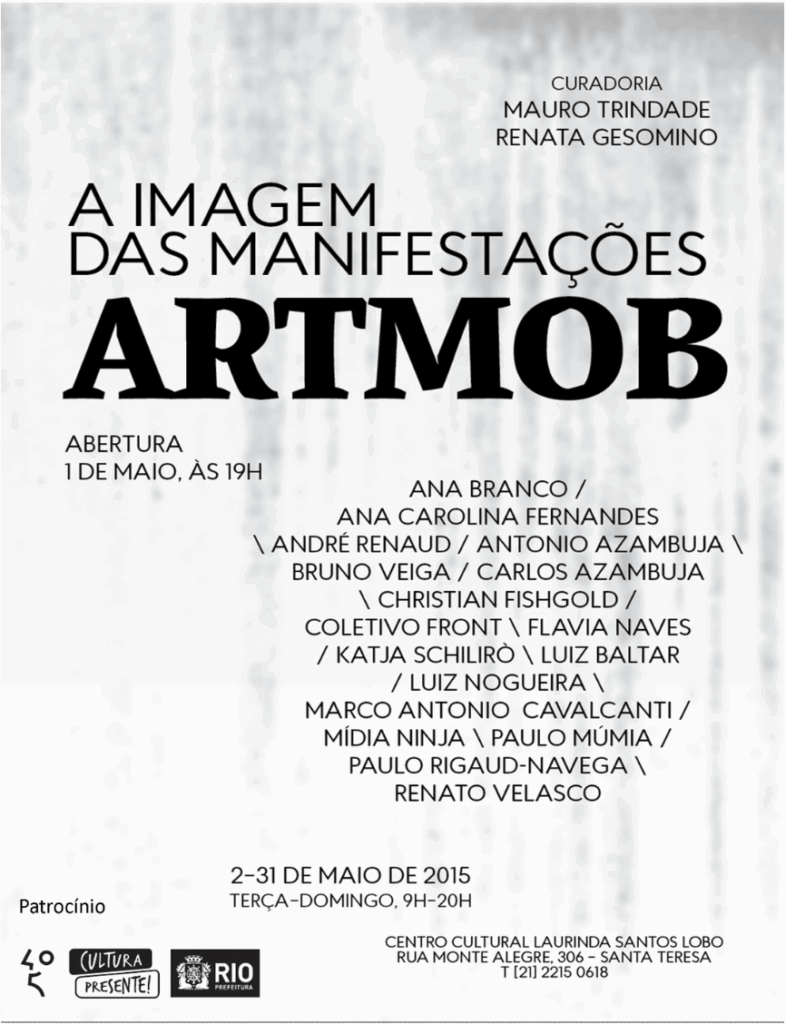
Arandu – Listen to the Weather is a celebration of 35 years of Indigenous filmmaking from Brazil. Guest curators Christian Fischgold, Takumā Kuikuro and Graci Guarani programmed 8 classic films in this key tradition of contemporary Latin American cinema. Head to the Arandu page to read some background information about the programme and to browse the film titles.
Trinh T. Minh-ha’s latest film What About China? receives the 2023 President’s Award. The Vietnamese-born filmmaker, poet and theorist whose innovative and experimental approach has explored questions of representation, film form, feminism and post-coloniality, has received the award in person in Bristol on Thursday 23 March, when the film also screened at Arnolfini in the cinema. What About China? was also available for streaming worldwide 24-27 March.
Disability Futures is a themed film strand from across the programme focusing on disabled and neurodiverse lifeworlds. These films are accompanied by a livestreamed talk by Annelies Kusters and Erin Moriarty, entitled “The birth of a genre: Re-framing language in deaf ethnographic film” on 8 March, 5:00-6:30 pm (London time).
In Main Competition you will find 10 groundbreaking feature documentaries competing for the RAI Film Prize and the Basil Wright Prize. Each of these film is, in its own way, a reflection on what contemporary anthropological cinema can look and feel like: innovative, daring and surprising.
Head to Music Docs for a collection of films celebrating heritages of music and sound, from Cuba to Poland via India, Ireland and Iran.
The Shorts, Student and Animation categories will quench your desire for short-form documentary from emerging and established talent. A whirlwind of images and sounds from across the globe.
The Werbner Award collects our most on-brand films: feature-length docs made by professional anthropologists, based on extensive fieldwork. Thoughtful and engaging.
Enjoy the programme!
ARANDU – LISTEN TO THE WEATHER
CELEBRATING 35 YEARS OF INDIGENOUS FILMMAKING FROM BRAZIL: KEY FILMS AND FILMMAKERS WORKING FROM THE LATE 90S TO THE PRESENT.
A curated programme streaming online 3-31 March 2023.
Live in Bristol 22-25 March 2023.
At ICA (London), Sunday 19 March 2023, 18:15
The aim of ARANDU – LISTEN TO THE WEATHER is to highlight the artistic, political, cultural, preservation and environmental issues raised by Indigenous film, from the point of view of the Indigenous communities themselves.
Background Since the 1980s, audiovisual production has been an essential tool of struggle and resistance for Brazilian Indigenous groups, mixing ethical, political, cosmological and aesthetic components.
Currently, about 90% of Brazilian Indigenous communities have their own filmmaker, who is responsible for cultural archiving, transmitting audiovisual technical knowledge to younger generations, and for disseminating information and images to mainstream media.
The Indigenous filmmakers have established themselves as key figures in the symbolic production of knowledge, contributing to subvert and decolonize commonly accepted visual notions about what it means to be Indigenous.
In this context, Indigenous film production has become a fundamental aspect of contemporary Latin American cinema. These films were awarded at important film festivals, especially in the UK, Canada, the US, France, Portugal, Italy, Brazil, Austrália, Belgium, Germany, Chile, and Mexico.
Curators biographies:
GRACI GUARANI is one of the pioneer indigenous women in original audiovisual productions. She is a professor of the course Indigenous Women and New Social Media – from Invisibility to Access to Rights (UN Women Brazil). She was a facilitator of the workshop Ocupar a Tela: Mulheres, Terra e Movimento [Occupying the Screen: Women, Earth and Movement] Instituto Moreira Salles and Museu do Índio, 2019. In 2020, she participated in the Women in Media and Cinema roundtable at the 70th Berlinale.
CHRISTIAN FISCHGOLD holds a PhD in Comparative Literature (Brazil – Africa). He is currently a Visiting Researcher at the CEstA Centro de Estudos Ameríndios-USP (2022). He worked at the University of Manchester’s School of Arts, Languages, and Cultures (2020-21, UK), with research on works by indigenous filmmakers in Brazil. He holds a post-doctorate in Theory and Literary History at the Institute of Language Studies (IEL Unicamp, Brazil, 2019), with research on Brazilian Cultural Anthropophagy and Angolan Cultural Neo-animism. Dr Fischgold researches the relationships between literature, anthropology, and cinema, with emphasis on interdisciplinary relationships between aesthetics and politics and on contemporary identity reconfigurations. He has also developed projects in the experimental film area, and collaborated in collective volumes and published articles in several academic journals. Creator and curator of the 1st Brazil Indigenous Film Festival UK.
TAKUMĀ KUIKURO Internationally renowned filmmaker Takumā Kuikuro grew up in Ipatse village, in the Xingu Indigenous Land, in the Brazilian Amazon basin. His productions The Day the Moon Menstruated and Hyperwomen have gained international recognition. Filmmaker, member of the Kuikuro indigenous people. Founder of the Kuikuro Film Collective. He is president of the Alto Xingu Family Institute (IFAX). In 2017, he received the Queen Mary University London Honorary Scholarship Award. In 2019, he was the first indigenous judge at the Brazilian Film Festival in Brasília. Creator and curator of the 1st Brazil Indigenous Film Festival UK.Arandu
ARANDU AT ICA
In-person screening at the Institute of Contemporary Arts (ICA) in London, Sunday 19 March 2023, 18:15, with curators Takumā Kuikuro and Christian Fischgold. This screening is not included in the festival pass and requires a separate ticket.
This programme showcases four short and medium-length films that are part of Arandu – Listen to the Weather, a curated programme celebrating 35 years of Indigenous filmmaking from Brazil. This selection for ICA focuses on women’s environmental movements to revert deforestation, and on the efforts of Indigenous communities to narrate their histories, from their own point of view. Curators Takumā Kuikuro and Christian Fischgold will be present to introduce the programme and to take questions after the screenings.
The screening will be followed by a Q&A with curators Takumā Kuikuro and Christian Fischgold, hosted by RAI Film Festival director Caterina Sartori.
INDIGENOUS FILMMAKERS ROUNDTABLE
This roundtable takes place in person.
Saturday 25 March 2023
11:00-12:30
Watershed (Bristol, UK)
Since 1991 The RAI Film Festival has tried to celebrate Indigenous filmmakers and share their work alongside anthropological films in the hopes of nurturing an ongoing dialogue and exchange. Admittedly this has, over the last 30 years, never been more than a drop in the bucket compared to the phenomenal growth and development of a newly global Indigenous filmmaking movement. The scale and spread of Indigenous creatives working in film, video, audio, and digital media have given voice to stories that document cultural values, promote social change and explore distinct aesthetic and narrative perspectives.
In this roundtable, we invite the Indigenous filmmakers in this year’s festival to reflect on their creative journeys as filmmakers. What does the gaining momentum and higher visibility of Indigenous media mean to their work? What are the next moves for their careers? In what ways would they like to develop their creative and documentary approaches?
The session will be moderated by Prof Faye Ginsburg.